Anyone who has spent a weekend afternoon skimming leaves, brushing walls, and vacuuming sediment from a pool floor knows the tedious reality of manual pool cleaning. It drains time, energy, and enthusiasm—especially when debris returns within days. Robotic swimming pool vacuums have transformed this chore into an automated process, freeing pool owners to enjoy their water rather than labor over it. But not all robotic cleaners perform equally, and the secret behind their effectiveness lies largely in their cleaning patterns. How does the path a robot follows across your pool’s surfaces determine whether it captures every grain of sand or leaves frustrating patches of grime behind? The answer involves a fascinating intersection of navigation technology, algorithmic design, and practical engineering. This article explores how different cleaning patterns directly enhance robotic pool vacuum performance, why they matter for efficiency and filtration, and how new users can leverage this knowledge to select the right model for their needs.
Understanding Cleaning Patterns: The Core of Robotic Pool Vacuum Technology
Cleaning patterns refer to the predetermined or dynamically generated paths that a robotic pool vacuum follows as it moves across pool surfaces. Think of them as the robot’s internal map—a set of instructions dictating where it travels, how it turns, and when it revisits an area. These patterns govern every aspect of navigation, from traversing the flat expanse of a pool floor to scaling walls and negotiating tight corners around steps or ladders.
Their function extends beyond simple movement. A well-designed cleaning pattern ensures the robot’s brushes and suction mechanism contact every square inch of surface area, dislodging algae, lifting fine sediment, and capturing leaves before they decompose and cloud the water. Without an intentional pattern, a robotic swimming pool vacuum might repeatedly cover the same zones while neglecting others entirely, leaving visible dirt lines or biofilm buildup in missed spots. Patterns matter because they translate motor power and suction capability into actual results—thorough debris removal across diverse surfaces. The relationship between cleaning patterns and robotic efficiency is direct: a smarter path means less wasted energy, fewer redundant passes, and a consistently cleaner pool in less operational time. Understanding this core technology helps pool owners appreciate why pattern design separates mediocre machines from genuinely effective ones.
See also: Technical Maintenance Discovery Portal Igrefilling Explaining Device Refill Related Searches
Types of Cleaning Patterns and Their Impact on Performance
Robotic pool vacuums employ several distinct cleaning patterns, each engineered to address specific challenges posed by pool geometry and debris distribution. The three primary categories—random, systematic, and smart adaptive—differ significantly in how they approach coverage, and understanding these differences reveals why some robots deliver spotless results while others leave owners disappointed.
Random patterns direct the robot along unpredictable paths, bouncing off walls and obstacles at varying angles. Systematic patterns follow predetermined geometric routes such as parallel lines, grids, or expanding spirals that methodically cover the entire floor. Smart adaptive patterns, found in advanced models from brands like iGarden, combine onboard sensors with algorithmic intelligence to map the pool’s dimensions in real time and adjust their trajectory dynamically—ensuring no area is overlooked regardless of irregular shapes, benches, or shallow-end transitions.
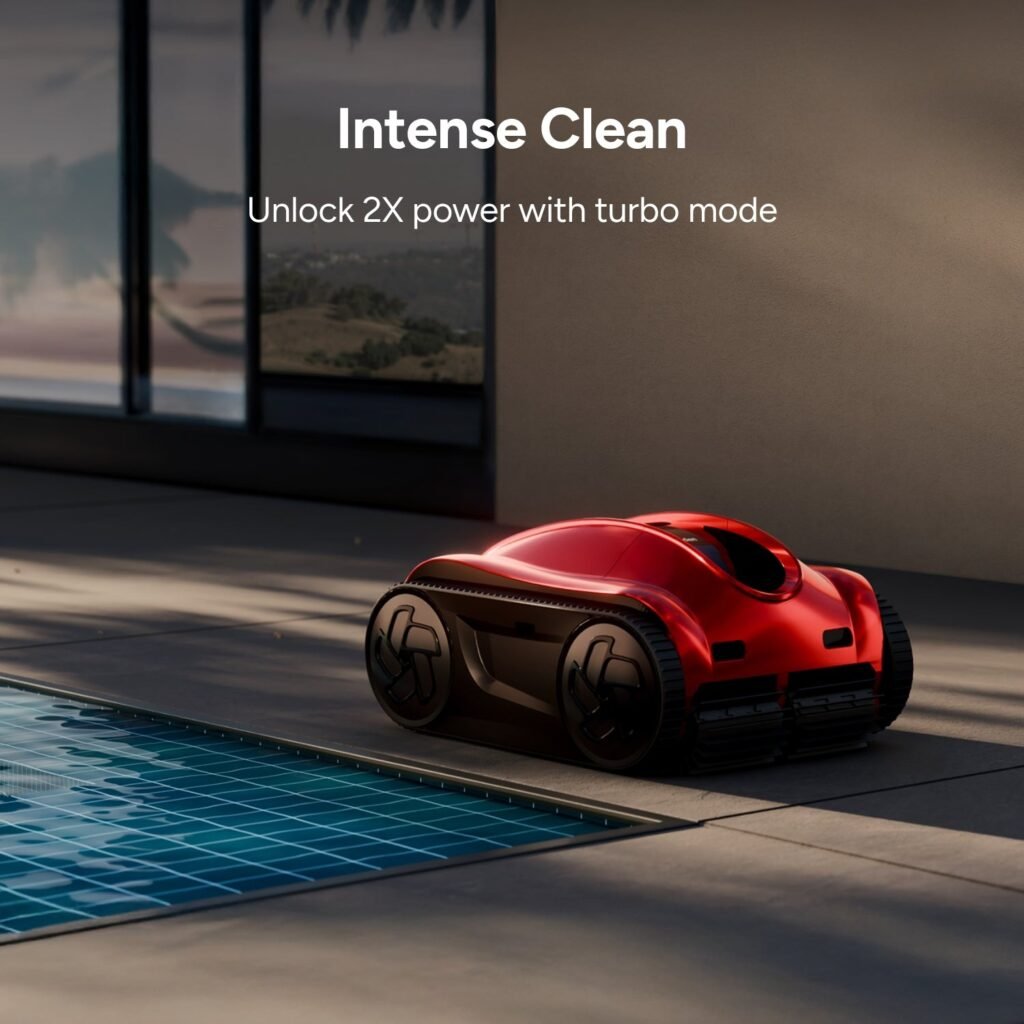
Pool shape and size heavily influence which pattern performs best. Rectangular pools benefit from straightforward grid paths, while freeform or kidney-shaped pools demand adaptive navigation that recalculates routes around curves. Cleaning speed also depends on pattern choice: a systematic approach typically completes full coverage faster than random movement because it eliminates redundant passes over already-clean zones. For large pools with heavy debris loads, smart patterns that prioritize high-accumulation areas first can cut total cleaning time substantially while maintaining comprehensive surface contact.
Random vs. Systematic Patterns: Pros and Cons
Random patterns hold a counterintuitive advantage in pools with unpredictable debris—fallen blossoms carried by shifting winds, for instance, or sand deposited unevenly by swimmers. Because the robot’s path varies each cycle, it eventually reaches areas that a fixed grid might approach from only one angle, sometimes dislodging debris trapped against irregular surfaces. However, randomness comes at a cost: coverage probability rather than certainty means the robot may need longer run times to achieve thorough results, and some corners may receive attention only by chance.
Systematic patterns excel where consistency matters. A grid pattern ensures parallel sweeps with slight overlap, guaranteeing that brushes and suction contact every tile. Spiral patterns work outward from the center or inward from walls, creating a predictable cleaning sequence ideal for pools with uniform debris like fine dust or algae film. The trade-off is rigidity—a purely systematic robot may struggle in pools with complex obstacles unless its programming includes obstacle-avoidance logic. For pools surrounded by heavy tree canopy producing large leaf loads, systematic patterns paired with strong suction deliver reliable daily maintenance. Lighter debris environments with occasional sand or pollen often perform well under random navigation, provided the cycle runs long enough to achieve statistical full coverage.
How Cleaning Patterns Boost Robotic Efficiency and Pool Filtration
The connection between cleaning patterns and energy conservation is straightforward: when a robot follows an optimized path, it spends less time retracing already-clean surfaces and more time addressing genuine debris. This translates directly into lower electricity consumption per cleaning cycle and extended battery life for cordless models. A robot running a smart adaptive pattern might complete full-floor coverage in ninety minutes, while a randomly navigating unit requires two hours or more to achieve comparable results. Over weeks and months, those saved minutes accumulate into meaningful reductions in operational cost and mechanical strain.
Efficient patterns also reduce physical wear on the vacuum’s components. Brushes that sweep clean tile repeatedly degrade faster without productive purpose, and drive motors that execute unnecessary turns experience accelerated bearing fatigue. When a cleaning pattern minimizes redundant movement, every component operates closer to its intended duty cycle, extending the machine’s service life and reducing replacement part expenses. This aspect of robotic efficiency often goes unrecognized by new owners who focus solely on suction power rather than navigational intelligence.
Perhaps most importantly, well-executed cleaning patterns work in concert with pool filtration systems to maintain water clarity. A robotic vacuum that systematically lifts sediment from the floor prevents particulates from circulating back into the water column, where they would otherwise burden the pool’s main filter and reduce its lifespan. By capturing debris at the source—before it dissolves or fragments into microscopic particles—the robot reduces chemical demand and keeps filtration hardware operating at peak efficiency. The synergy between thorough pattern-based cleaning and pool filtration creates a compounding benefit: cleaner surfaces mean less suspended matter, which means less strain on filters, which means consistently crystal-clear water with minimal intervention from the owner.
A Practical Guide for New Users: Selecting the Right Robotic Pool Vacuum
Choosing a robotic pool vacuum can feel overwhelming when dozens of models compete for attention with flashy marketing claims. However, by focusing on cleaning patterns as a primary selection criterion alongside filtration compatibility and build quality, new users can cut through the noise and find a machine that genuinely matches their pool’s demands. The following steps provide a structured approach to making that decision with confidence.
Step 1: Assess Your Pool’s Debris and Filtration Requirements
Start by honestly evaluating what your pool collects between cleanings. Walk the perimeter and note whether your primary challenge involves large organic matter like leaves and twigs, fine particulates such as sand or pollen, or a combination of both. Pools surrounded by mature trees face heavy leaf loads that demand strong suction paired with systematic cleaning patterns capable of sweeping corners where debris accumulates. Desert or coastal pools dealing primarily with fine dust and sand require robots with tight-mesh filtration baskets and patterns that ensure complete floor coverage without stirring sediment back into suspension. Next, consider your pool’s existing filtration system. If your main pump filter is already working hard to manage chemical balance and circulation, a robotic vacuum with an efficient onboard filtration canister will relieve that burden significantly. Match the robot’s filter mesh rating to your dominant debris size—coarser screens handle leaves efficiently but miss ultra-fine particles, while fine-mesh filters capture nearly everything but require more frequent emptying in heavy-debris environments.
Step 2: Compare Models Based on Cleaning Patterns and Features
Once you understand your pool’s specific needs, compare available models by examining their navigation technology first. Look for robots that specify their pattern type clearly—whether random bounce, fixed grid, or intelligent mapping. Smart home-oriented brands like iGarden exemplify the smart adaptive category, using real-time environmental scanning to generate efficient routes tailored to your pool’s unique geometry, which proves especially valuable for irregularly shaped pools or those with built-in features like tanning ledges and integrated spas. Beyond patterns, evaluate battery life relative to your pool’s surface area, ensuring the robot can complete at least one full coverage cycle before requiring a recharge. Assess whether the unit offers wall-climbing capability and waterline scrubbing, since algae growth concentrates at the water’s edge. Smart controls—app connectivity, scheduling options, and cycle customization—add convenience but should complement strong fundamental navigation rather than compensate for weak pattern logic. When comparing options, prioritize models that pair intelligent cleaning patterns with robust filtration, reliable climbing ability, and sufficient runtime for your pool’s dimensions.
Step 3: Making an Informed Decision for Long-Term Performance
Before committing to a purchase, seek out real-world user reviews from pool owners with similar pool shapes and debris challenges. Video demonstrations showing the robot in action reveal more about pattern execution than any specification sheet—watch for smooth transitions between floor and wall, consistent edge coverage, and minimal time spent retracing completed areas. If possible, test a model during a retailer’s trial period to observe how it handles your specific pool over several cycles. For long-term performance, factor in maintenance simplicity: how easily can you access and clean the filter, how available are replacement brushes and tracks, and does the manufacturer provide firmware updates that refine navigation algorithms over time? A robot that balances intelligent cleaning patterns with durable construction and accessible maintenance will deliver years of reliable service, keeping your pool consistently inviting while protecting your investment in both the machine and your pool’s filtration infrastructure.
Optimizing Performance: Integrating Cleaning Patterns with Pool Maintenance
Getting the most from your robotic pool vacuum requires thoughtful integration with your broader pool maintenance routine. Run your robot during off-peak hours when swimmers are absent and the water is still—calm conditions allow the vacuum’s cleaning pattern to operate without interference from turbulence that redistributes settled debris. Schedule cleaning cycles to complement your main filtration pump’s run time rather than overlap with it; running the robot first allows it to capture floor sediment before the circulation system activates, preventing particulates from reaching your primary filter basket or cartridge.
Adjust cleaning frequency based on seasonal debris patterns. During autumn leaf fall or spring pollen surges, daily cycles using systematic or smart adaptive patterns keep accumulation manageable and prevent organic matter from decomposing on surfaces. In quieter months, two or three weekly sessions maintain clarity without unnecessary wear on the machine. Empty the robot’s onboard filter after every cycle to preserve suction strength and ensure its cleaning pattern achieves maximum debris capture on subsequent runs. Periodically inspect brushes and tracks for wear that could compromise surface contact during wall climbs or tight-corner navigation. By aligning your robot’s pattern-driven cleaning schedule with chemical treatments, filtration cycles, and seasonal conditions, you create a cohesive maintenance ecosystem where each element reinforces the others—resulting in persistently clear water, reduced chemical costs, and a pool that remains ready for enjoyment at any moment.
Embrace Pattern-Driven Cleaning for a Consistently Pristine Pool
Cleaning patterns represent the defining technology that separates a truly effective robotic pool vacuum from one that merely moves through water. As we’ve explored, these navigational algorithms—whether random, systematic, or smart adaptive—directly determine how thoroughly a robot removes debris, how efficiently it uses energy, and how well it preserves both its own components and your pool’s filtration system. The right pattern ensures complete surface coverage, reduces redundant movement, and works synergistically with your existing pool infrastructure to maintain crystal-clear water with minimal owner involvement. For new users entering the market, prioritizing cleaning pattern intelligence over raw suction numbers leads to better long-term satisfaction. Assess your pool’s unique geometry and debris challenges, compare models with navigation technology as your primary lens, and integrate your chosen robot into a holistic maintenance schedule that accounts for seasonal variation. The era of spending weekends wrestling with manual vacuums and telescoping poles is over. By embracing pattern-driven robotic cleaning, you reclaim your time while achieving results that manual effort rarely matches—a pool that stays consistently inviting, healthy, and ready for enjoyment whenever the moment calls.