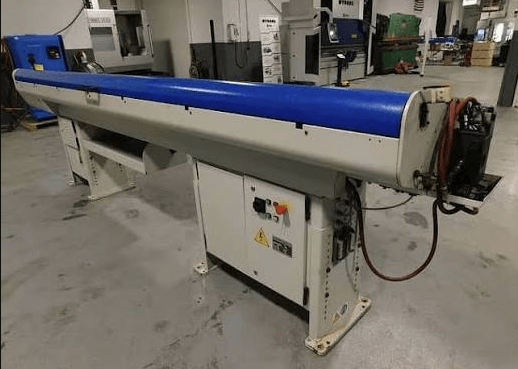
Machine shops running high-volume CNC turning operations know that spindle downtime represents one of the most significant hidden costs in production efficiency. Automatic bar feeders address this challenge directly by keeping raw bar stock continuously supplied to the machine, but the quality and reliability of different manufacturers’ bar feeder systems varies considerably, making careful evaluation essential before investing in this equipment.
The Production Case for Automatic Bar Feeding
Without automated bar feeding, CNC turning operations require manual reloading of bar stock each time a piece is completed, forcing the spindle to sit idle during reload and creating a hard ceiling on unattended production time. An automatic bar feeder eliminates this constraint by mechanically advancing new bar stock into the machine as needed, allowing unattended or lights-out production runs that can dramatically increase overall equipment utilization.
Key Differentiators Among Bar Feeder Manufacturers
When comparing automatic bar feeder manufacturers options available on the market, feeding accuracy and consistency stand out as critical performance factors, since inconsistent bar advancement can introduce dimensional variation into finished parts, particularly problematic for precision components with tight tolerance requirements.
Noise and vibration levels during operation also vary meaningfully between manufacturers, affecting both workplace conditions and, in some cases, machining accuracy, since excessive vibration transmitted through the bar feeder into the machine spindle can degrade surface finish quality on sensitive turning operations.
Compatibility With Existing CNC Equipment
Bar feeders need to integrate properly with the specific CNC lathe or turning center they’ll be paired with, including matching spindle bore diameter capacity, synchronizing feed timing with machine control systems, and ensuring physical footprint compatibility within existing shop floor layouts. Manufacturers offering strong integration support and documented compatibility with common CNC machine brands tend to reduce installation complications considerably.
See also: Professional Keyword Discovery Hub Hidrognologista Explaining Health Specialist Searches
Bar Length and Diameter Range Capability
Different bar feeder models accommodate varying ranges of bar diameter and maximum bar length, and shops producing a diverse range of parts from varying stock sizes should carefully match feeder capability to their actual production requirements, since a feeder with insufficient range flexibility may require supplementary manual feeding for certain job types, undermining the automation benefit the equipment was intended to provide.
Maintenance Requirements and Long-Term Reliability
Like any mechanical automation equipment, bar feeders require regular maintenance, including lubrication of feeding mechanisms, inspection of guide channels for wear, and periodic calibration checks to maintain feeding accuracy over the equipment’s operational life. Manufacturers who provide clear maintenance documentation and readily available spare parts tend to result in lower long-term ownership costs.
Evaluating Total Cost of Ownership
Beyond the initial purchase price, shops should consider factors such as changeover time between different bar sizes, energy consumption, and the manufacturer’s track record for equipment longevity when calculating the true total cost of ownership for a bar feeder investment over its expected service life.
Conclusion
Selecting the right automatic bar feeder manufacturer involves evaluating feeding accuracy, machine compatibility, size range flexibility, and long-term reliability alongside initial purchase cost. Machine shops that invest time in thorough manufacturer evaluation typically achieve better production efficiency gains than those who select equipment based on price alone.
FAQs
Q1: How much can automatic bar feeders improve CNC machine utilization? By eliminating manual reload downtime, bar feeders can enable extended unattended production runs, significantly increasing overall spindle utilization compared to manual bar loading.
Q2: What should I check for compatibility with my existing CNC lathe? Confirm spindle bore diameter compatibility, feed timing synchronization capability, and physical footprint fit within your existing shop floor layout before purchasing.
Q3: Do bar feeders require frequent maintenance? Yes, regular lubrication, guide channel inspection, and periodic calibration checks are needed to maintain consistent feeding accuracy over the equipment’s service life.