Access Registry Search Archives for 3713584313, 3273967723, 3896053477, 3347343141, 3498781123

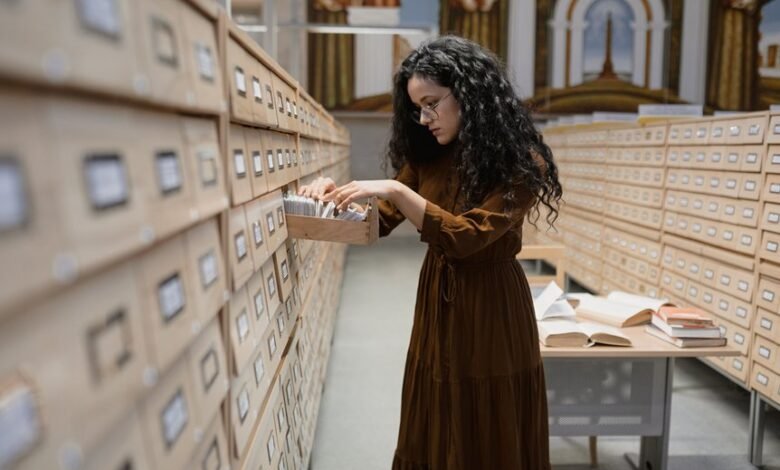
Access Registry Search Archives for the IDs 3713584313, 3273967723, 3896053477, 3347343141, and 3498781123 yields discrete record profiles and metadata schemas. Each entry presents foundational attributes, timestamps, and provenance tags that enable cross-linkage across sources. By aligning linkage patterns and citation frames, researchers can map relational coordinates within a registry lattice. This approach supports reproducible queries and targeted synthesis, inviting careful examination of underlying connections and their implications for archival provenance.
What the Access Registry Search Reveals About Each ID
The Access Registry Search yields discrete records associated with each provided ID, revealing distinct metadata, linkage patterns, and registry entries. Each entry documents foundational attributes, temporal markers, and relational coordinates, forming a lattice of contextual signals. Cross referencing metadata appears as structured cues, while crafting targeted queries translates these signals into actionable search criteria, guiding researchers toward precise connections without extraneous detail.
How to Cross-Reference Metadata Across 3713584313, 3273967723, 3896053477, 3347343141, 3498781123
Cross-referencing metadata across the IDs 3713584313, 3273967723, 3896053477, 3347343141, and 3498781123 requires a systematic approach to map common fields, temporal markers, and relational coordinates. This process emphasizes metadata alignment and cross reference heuristics, presenting a precise, citational framework. It supports a freedom-seeking audience through transparent, reproducible methods and clearly delineated attribute correspondences.
Step-by-Step Guide to Crafting Targeted Registry Queries
Understanding how to craft targeted registry queries requires a structured, repeatable approach that yields precise results across multiple identifiers. The guide presents a step-by-step framework for formulating discovery constraints and defining registry queries, aligning syntax, filters, and scope. It emphasizes reproducibility, documentation, and verification, ensuring results remain transparent, auditable, and adaptable to evolving datasets without sacrificing analytical rigor or freedom in inquiry.
Interpreting Connections and Context: From Records to Insight
From the records, connections are inferred by situating individual entities within temporal, relational, and contextual frames, enabling the transformation of discrete entries into actionable insight.
In this view, discovery techniques assemble cross-source signals, while structured citation anchors provenance.
Data synthesis codifies associations, revealing patterns and networks.
This disciplined interpretation supports transparent reasoning, guiding purposeful inquiry across registry archives.
Conclusion
The registry’s meticulous mappings promise reproducibility, even as they quietly cloak complexity behind neat metadata. Readers are urged to trace connections with citational rigor, yet the lattice’s elegance invites a wry smile at the inevitable denouement: certainty is curated, not granted. Irony lingers as researchers chase explicit links while plausible inferences shade the edges. In this carefully structured archive, conclusions arrive with formal poise, and the audience recognizes that truth, delicately indexed, remains perpetually in transit.