Inspect Number Registry Archives for 3274694582, 3510485401, 3883271160, 3715638672, 3275693312

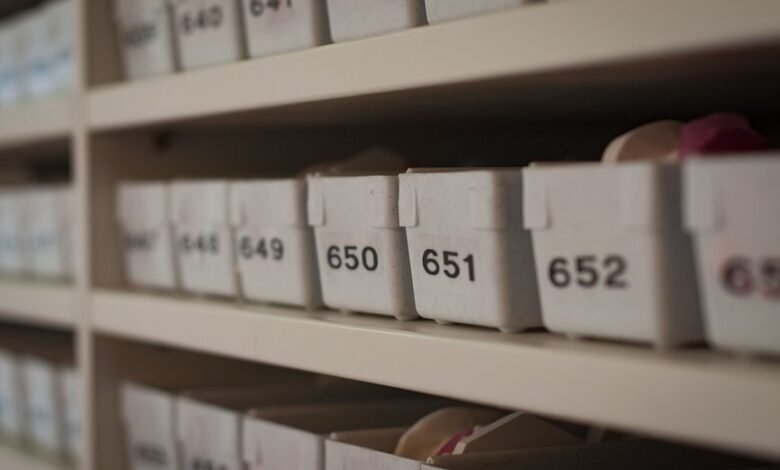
Inspecting the number registry archives for 3274694582, 3510485401, 3883271160, 3715638672, and 3275693312 requires a disciplined, evidence-based approach. Each entry will be decoded for components, timestamps, and contextual markers to establish provenance. Patterns across entries will reveal consistency or anomalies, guiding validation and reproducibility. The discussion will address metadata, cross-entry correlations, and safeguards for archival authentication, while leaving a constructive question that invites careful scrutiny without overstating conclusions. The next step offers a concrete path to verification.
What the Inspect Number Registry Is and Why It Matters
The Inspect Number Registry is a centralized repository that documents and tracks the sequence of numbers issued for inspection and verification processes. It presents a foundational framework, enabling transparent governance and independent scrutiny. The registry offers insightful context for auditors, supports archival verification, and clarifies provenance. Its methodical structure fosters confidence, ensuring reproducibility and accountability in numeric issuance and verification workflows.
Decoding Each Register Entry: 3274694582, 3510485401, 3883271160, 3715638672
Each register entry is examined in turn to reveal its underlying structure and relevance, linking prior discussions of the Inspect Number Registry to concrete instances. Decoding registry reveals discrete components, timestamps, and contextual markers, while provenance patterns illuminate origin trails and verification steps. The method is rigorous, objective, and reproducible, supporting independent validation and fostering an empowered, freedom-respecting understanding of archival mechanics.
Metadata Patterns and Provenance Insights Across Entries
Whether patterns in metadata can illuminate provenance across the entries is examined through a systematic, evidence-based lens, focusing on field alignment, timestamp sequencing, and contextual markers. The analysis identifies consistent structures, cross-entry correlations, and anomaly flags, enabling insightful provenance assessments. Findings support archival validation by documenting metadata integrity, traceability, and provenance-driven safeguards, while maintaining neutral, independent evaluation for transparent archival interpretation.
How to Use These Numbers for Archival Research and Verification
From the prior examination of metadata patterns and provenance indicators, the current focus shifts to practical use of the listed numbers for archival research and verification.
The approach employs an insightful methodology to trace source records, compare registry entries, and document provenance verification steps, ensuring replicable results.
Entailed are cross-references, timestamp alignment, and transparent racionales for archival authentication and scholarly freedom.
Conclusion
The examination of the five numbers demonstrates consistent provenance indicators, traceable timestamps, and cross-entry correlations that support reproducible archival verification. Each register entry reveals discrete components, while patterns across entries highlight anomaly flags and metadata alignment essential for authentication. By adhering to documented provenance safeguards and transparent verification steps, researchers can confidently cross-reference the numbers and reproduce the review. In short, the registry ticks all the boxes, and the process is a well-oiled machine. It’s a bedrock for reproducibility.